SEO copywriting vs standard writing: differences and when to use each
Standard writing informs. SEO copywriting convinces. I explain the key differences between both approaches, with practical examples and when to apply each one on your website.
Published on · Updated on · 9 min read
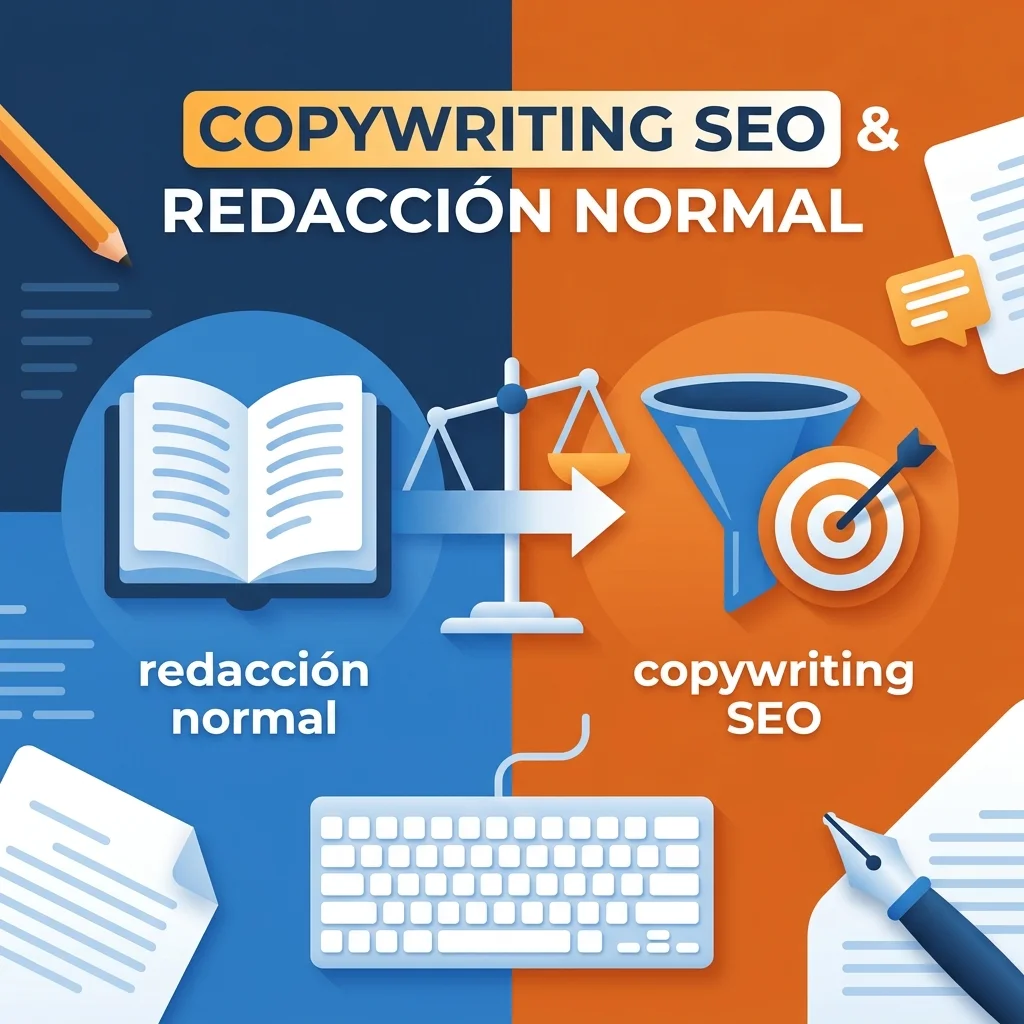
Standard writing informs. SEO copywriting convinces. One tells you what a product is. The other explains why the user needs it and why they should buy it from you.
This is the fundamental difference. Understanding it changes how you write for your website. If you’re starting from scratch, begin with what SEO is and how it works and the complete On-Page SEO guide.
What is standard writing?
Standard writing is everyday writing. Its main goal is to inform, describe or entertain. It doesn’t look for a specific action from the reader.
Characteristics of standard writing
- Neutral and objective language.
- Linear structure (introduction, body, conclusion).
- Explains features, not benefits.
- No call to action (CTA).
Standard writing example
Vitamin C serum with hyaluronic acid. 30 ml format. Suitable for all skin types.
This sentence describes the product, but doesn’t convince anyone to buy it.
What is SEO copywriting?
SEO copywriting combines persuasion techniques with search engine optimization. Its goal is to rank on Google and convert the reader into a client.
Characteristics of SEO copywriting
- Persuasive and emotional language.
- Includes strategic keywords. Here’s how to choose keywords wisely.
- Highlights benefits, not features.
- Structure designed to make reading and crawling easier (H1, H2, H3, lists). Review the H1, H2 and H3 hierarchy.
- Includes clear calls to action (CTAs).
- Answers the user’s search intent. Here’s how to identify search intent with AI Mode.
SEO copywriting example
Natural vitamin C serum for firmer, more hydrated and rejuvenated skin. Its antioxidant power will leave your skin glowing. Free shipping. I want it!
Same product, same objective fact. But here there’s a benefit, emotion and CTA.
Comparison table: key differences
These are the seven differences that best summarize the contrast between both approaches.
| Aspect | Standard writing | SEO copywriting |
|---|---|---|
| Goal | Inform or entertain | Rank and convert |
| Language | Neutral and objective | Persuasive and emotional |
| Structure | Linear | Hierarchical (H1, H2, lists) |
| Keywords | Doesn’t use them | Integrates them naturally |
| Approach | Product features | Benefits for the user |
| CTA | Doesn’t have one | Always includes a clear one |
| User | Any reader | Defined buyer persona |
Why SEO copywriting is key for your business
SEO copywriting lets you attract qualified traffic and convert it into clients. You don’t just bring visits, you guide the user toward an action: buying, subscribing or contacting.
Concrete benefits of SEO copywriting
- Improves your ranking: Google values useful and well-structured content.
- Increases CTR: attractive titles and meta descriptions generate more clicks. Here’s how to improve CTR on Google and how to optimize the meta title and meta description.
- Converts more: by talking about benefits and using clear CTAs, the user feels motivated to act.
- Builds trust: copywriting that connects with user needs builds credibility.
SEO copywriting vs standard writing: practical examples
Example 1: Category page
Standard writing:
«In our store you’ll find a wide variety of travel backpacks, available in different colors and sizes.»
SEO copywriting:
«Looking for the perfect backpack for your next trip? Discover our collection of travel backpacks, designed to give you comfort and security on every adventure. Free shipping on your first purchase!»
Example 2: Product page (Before/After/Bridge framework)
Standard writing:
«Coffee maker with built-in grinder and 15 programs. 1.5-liter tank.»
SEO copywriting:
Before: your morning routine shouldn’t depend on a badly made coffee. After: imagine waking up to the aroma of freshly ground coffee every morning. Bridge: the Delonghi Magnifica Evo turns your kitchen into your personal barista. 15 drinks with a single touch, adjustable grinder and automatic cleaning. Invest in your perfect coffee moment.
If you want to dive deeper into how to write content that ranks and converts at the same time, here’s the complete guide on SEO and GEO content that ranks and converts.
When to use each approach
It’s not about choosing one and discarding the other. It’s about knowing what each page needs.
| Page type | Recommended approach |
|---|---|
| Homepage | SEO copywriting (rank + convert) |
| Service pages | SEO copywriting |
| Product pages | SEO copywriting |
| Category pages | SEO copywriting |
| Informational blog articles | Soft SEO copywriting + useful data |
| Technical documentation or manuals | Standard writing |
| Purely informative content | Standard writing (or light mix) |
SEO copywriting isn’t just for selling: it also helps you rank better. If you want to build a complete content strategy, check out this SEO content plan in 5 steps. And if you work with AI, here’s how to optimize your website for AI (GEO).
Conclusion: standard writing informs. SEO copywriting convinces and converts. If you want your website to have not just visits, but for those visits to turn into clients, you need to apply SEO copywriting on your key texts: homepage, product pages, service pages and blog.
If you want to avoid the most typical mistakes when applying all of this, check out the list of SEO web mistakes and how to avoid them, and before closing off the strategy, run a complete SEO audit in 7 steps to check that everything is where it should be.

Want SEO copywriting on your website?
I write and rewrite the key texts on your website to rank on Google and convert visits into clients.